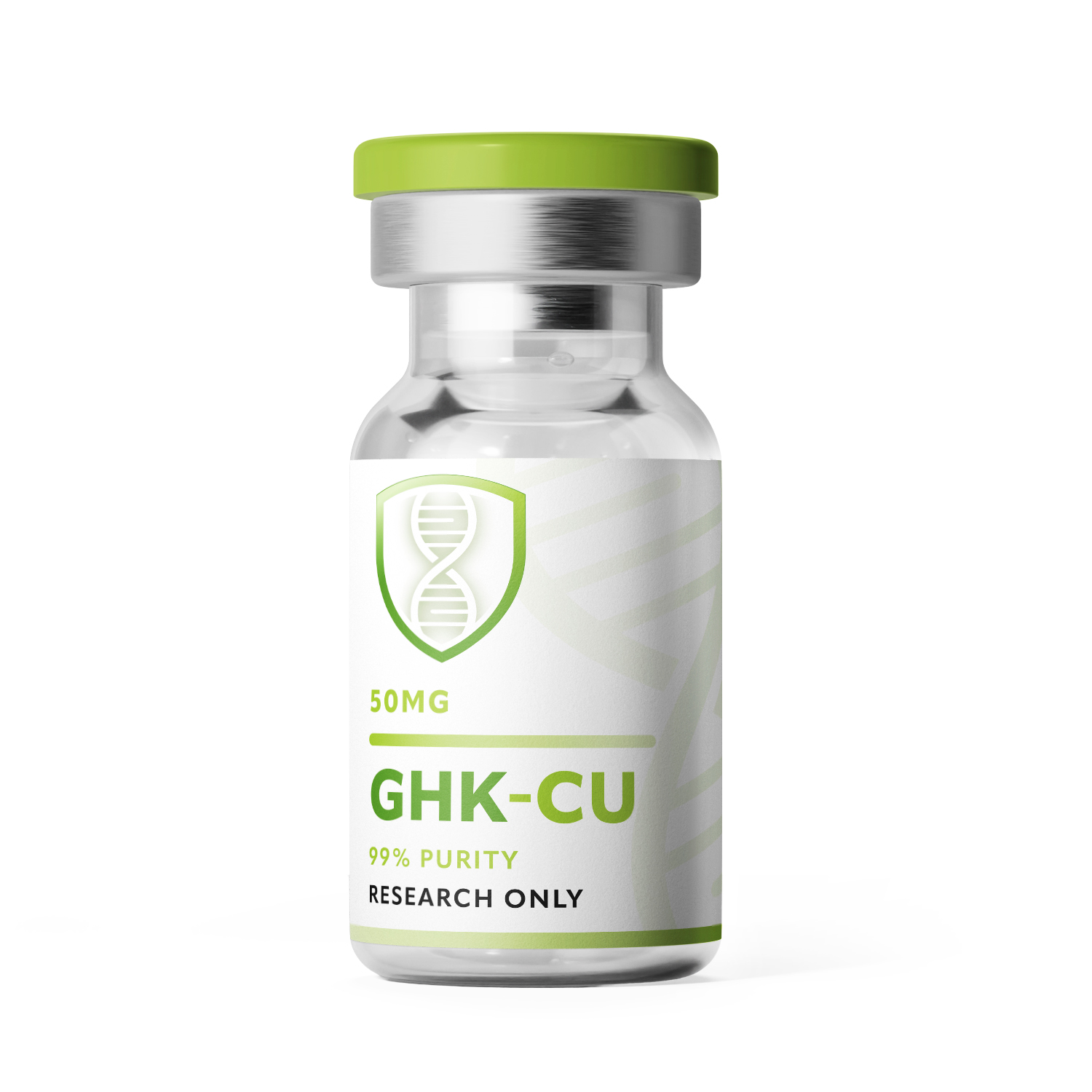
Overview
GHK‑Cu is a small peptide that naturally binds copper. It is found in human blood, saliva, and urine. In the lab, researchers use it to see how cells respond to copper and small peptides.
This peptide is not a drug or supplement. It is only for research. Scientists study how it interacts with cells, proteins, and other molecules. They look at how it may affect certain pathways and biochemical processes.
Biochemical Characteristics of GHK-Cu
GHK‑Cu is made of three amino acids: glycine, histidine, and lysine. When it binds copper, it becomes GHK‑Cu.
- Its amino acid sequence is: Gly‑His‑Lys.
- Molecular formula: C14H24N6O4Cu
- Molecular weight: ~340.3 g/mol
In labs, researchers watch how it binds to copper and how the complex behaves in cells. They also look at changes in proteins, enzymes, and other markers when GHK‑Cu is added to experimental systems.
Research Applications of GHK-Cu
In research studies, scientists add GHK‑Cu to cells and watch what happens over time. They may check how the cells grow or change. Sometimes, they look at how genes turn on or off. Other times, they see how enzymes or proteins react. They may also study how it works with copper in the cells.
The results can be different depending on the type of cells or tissue, the amount of peptide used, and how the experiment is set up. Every study can show slightly different changes.
Results are not always the same in every study. They can change based on how the experiment is designed, how much peptide is used, and what type of cells or tissue are tested. The purpose of this research is to observe basic chemical and cellular behavior, not applied or clinical effects.
Mechanistic and Pathway Context
Research suggests that GHK-Cu interacts with cell components that are sensitive to copper. This interaction may influence how copper is processed inside the cell. In laboratory settings, researchers observe how this peptide impacts cell signals, protein function, and gene activity over time.
Some studies also look at tissue-level changes in experimental models. All observations are made under controlled lab conditions. This work is strictly preclinical and exploratory.
Preclinical Research Summary
Preclinical studies use cells or animals to see how GHK‑Cu works in a lab setting. Researchers often measure things like copper levels, enzyme activity, or cell responses. They may watch how proteins or genes change when exposed to the peptide.
These studies are exploratory. Results depend on the system, the dose, and how the experiment is designed. They are not meant to predict effects in humans.
Formulation and Analytical Testing
GHK‑Cu is supplied as a lyophilized powder, 50 mg per vial or 10 mg per vial. It is handled in labs for precise experiments.
Common checks include:
- Confirming identity
- Testing purity
- Verifying copper content
It should be stored in a cool, dry place. Use normal lab safety procedures. It is not for injection or human use.
References
Pickart L, Thaler MM:
Copper peptide in human plasma. Science. 1973;180(4088):868–870.
Hong SJ, Kang SS, Dan DH:
Effects of copper-peptide complexes on cultured cells: biochemical modulation studies.
Pickart L: Peptide-copper complexes and gene expression modulation. Mol Cell Biochem. 2006;286(1–2):1–15.
Research Use Only
This product is intended for laboratory research use only. It is not intended for human or animal consumption, or for use in diagnostic or therapeutic procedures.