Overview
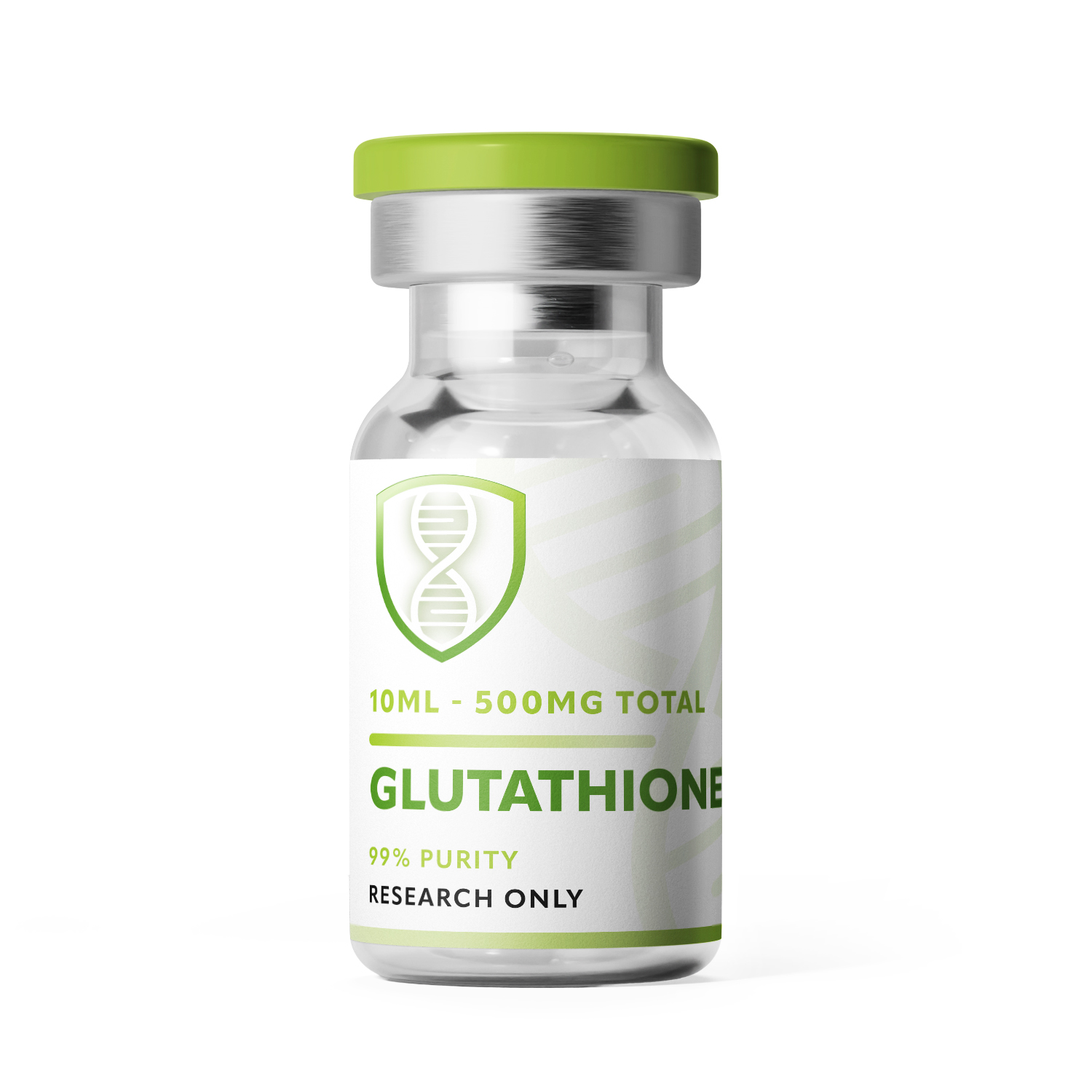
Glutathione 500 mg is a pure, lyophilized form of the naturally occurring tripeptide γ-L-glutamyl-L-cysteinyl-glycine. It is one of the most abundant low-molecular-weight thiols in the cells of mammals. Glutathione functions as the primary intracellular antioxidant in the biological system.
It is used to study redox balance, detoxification pathways, and cellular stress responses in a research setting. Glutathione also supports research on mitochondrial function and age-related oxidative damage. Each vial contains 500 mg of ≥99% pure reduced L-Glutathione.
The product appears as a white lyophilized powder. It is manufactured and analytically tested in the United States. For smaller-scale experiments, cell culture, or protocols require moderate quantities, this vial size is suitable.
L-Glutathione is supplied
only for laboratory research use, and is not meant for human consumption or therapeutic use.
Biochemical Characteristics
Glutathione (GSH) is a tripeptide composed of glutamic acid, cysteine, and glycine. It contains a special γ-glutamyl bond between glutamate and cysteine.
Key properties:
-
Molecular formula: C₁₀H₁₇N₃O₆S
-
Molecular weight:307.32 Da
-
CAS number:70-18-8
-
Appearance: White to off-white lyophilized powder
-
Solubility: Highly soluble in water (up to ~200 mg/mL)
-
Redox pair: GSH ↔ GSSG
-
Standard redox potential:~-240 mV at pH 7
The cysteine thiol group guides antioxidant and detoxification activity, and It allows glutathione to function as a reducing agent and nucleophile.
Glutathione Research
L-Glutathione is widely used in biochemical and cellular research.
Common applications include:
- Research on antioxidant defense and oxidative stress
- Glutathione S-transferase and Phase II detoxification investigation
- Pathways of apoptosis and the balance of Mitochondrial redox
- Models of liver injury, aging, and neurodegeneration
- Immune response and inflammatory experiments
- Research on cellular response involving toxins and radiation
The 500 mg format assists multiple experiments with minimal material waste.
Mechanism of Action
L-Glutathione keeps up with redox homeostasis within the cells through various pathways.
It directly neutralizes reactive oxygen and nitrogen species, and this includes hydrogen peroxide, superoxide, and peroxynitrite.
GSH also recreates other antioxidants with the help of redox cycling, including vitamin C, vitamin E, and coenzyme Q10.
Glutathione combines with electrophilic compounds via glutathione S-transferases. This forms water-soluble products for cellular elimination.
Glutathione manages protein thiol status through glutathionylation cycles, and it also supports the glutathione peroxidase system. Oxidized glutathione is recycled by glutathione reductase using NADPH. A disrupted GSH to GSSG ratio signals oxidative stress in research models.
Preclinical Research Overview
Preclinical researches confirm glutathione’s central role in oxidative protection, and in liver injury models, GSH depletion predicts hepatotoxicity.
Restoration reduces necrosis and supports cellular recovery, while in ischemia-reperfusion research, glutathione lowers lipid peroxidation.
It is also decreasing the release of inflammatory mediators, while the research regarding aging directly associates low GSH levels with mitochondrial dysfunction.
Repletion increases the transport efficiency of electrons and cellular longevity.
GSH also attenuates amyloid-beta toxicity in vitro, and protection against dopaminergic neuronal loss is demonstrated in models of neurodegeneration. Reproductive science indicates a relatively high spindle stability and less DNA damage. These findings support the function of glutathione in studies related to oxidative resilience.
Form and Analytical Testing
Form: Lyophilized powder
Purity: ≥99% by HPLC
Identity: Verified by mass spectrometry
Endotoxin:<0.1 EU/μg
Storage:2–8°C, protected from light
Reconstitution: Sterile or bacteriostatic water
Stability:24–36 months sealed; 1–2 weeks after reconstitution
Each batch undergoes third-party analytical verification.
Research Use Only Disclaimer
L-Glutathione 500 mg is sold
for research use only, and it is not approved for human or animal consumption, and it is not approved by
FDA, EMA, or any regulatory authority.
No therapeutic, diagnostic, or dietary claims are made; Use only in qualified laboratory environments with institutional oversight.
Referenced Citations
- Lu SC. (2013). Glutathione synthesis. Biochimica et Biophysica Acta (BBA) – General Subjects. 1830(5):3143–3153.
- Forman HJ, et al. (2009). Targeting oxidative stress in disease: promise and limitations of antioxidant therapy. Nature Reviews Drug Discovery. 8(7):579–591.
- Pizzorno J. (2014). Glutathione! Integrative Medicine. 13(1):8–12.
- Wu G, et al. (2004). Glutathione metabolism and its health implications. Journal of Nutrition. 134(3):489–492.
- Peptide Sciences product specifications: ≥99% purity, lyophilized form, analytical data available upon request.